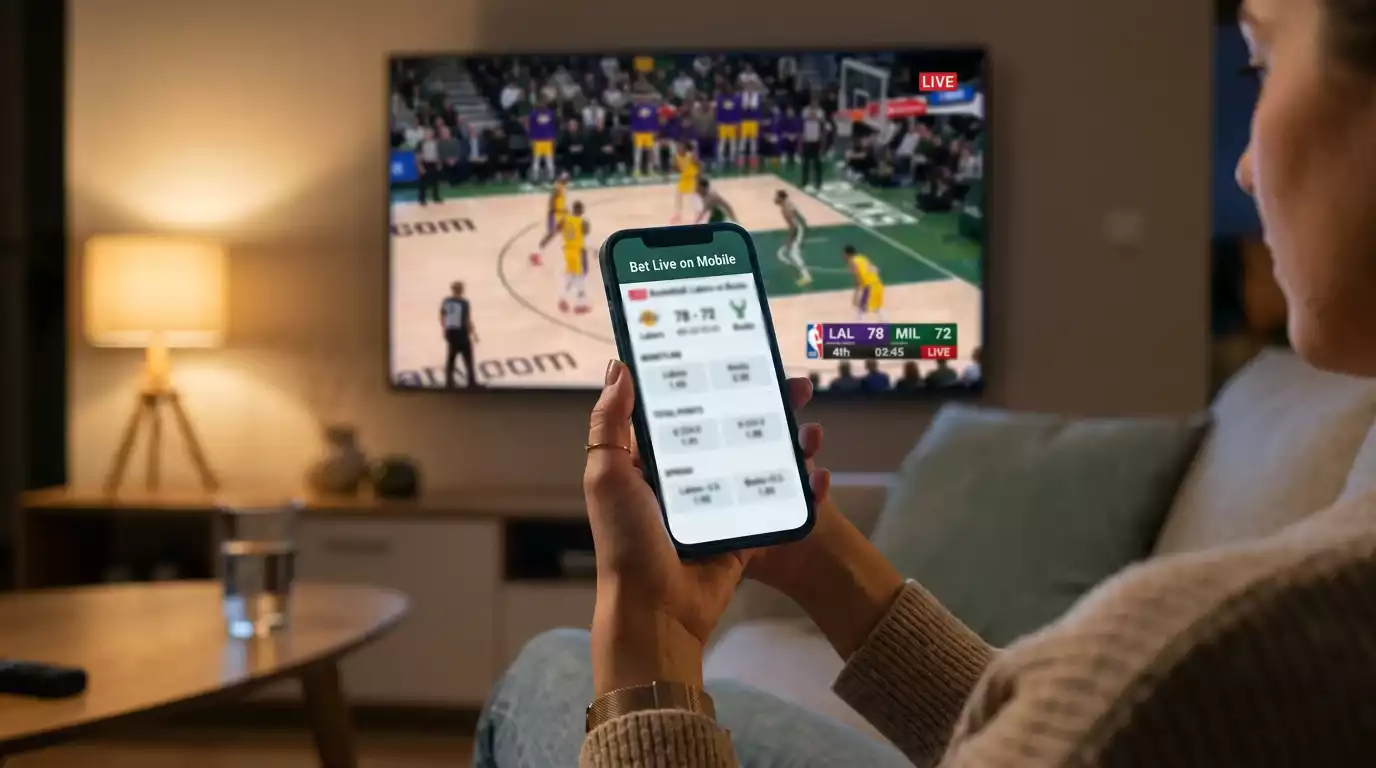
NBA Exchange Betting: Navigating Back and Lay Markets
 Available in US
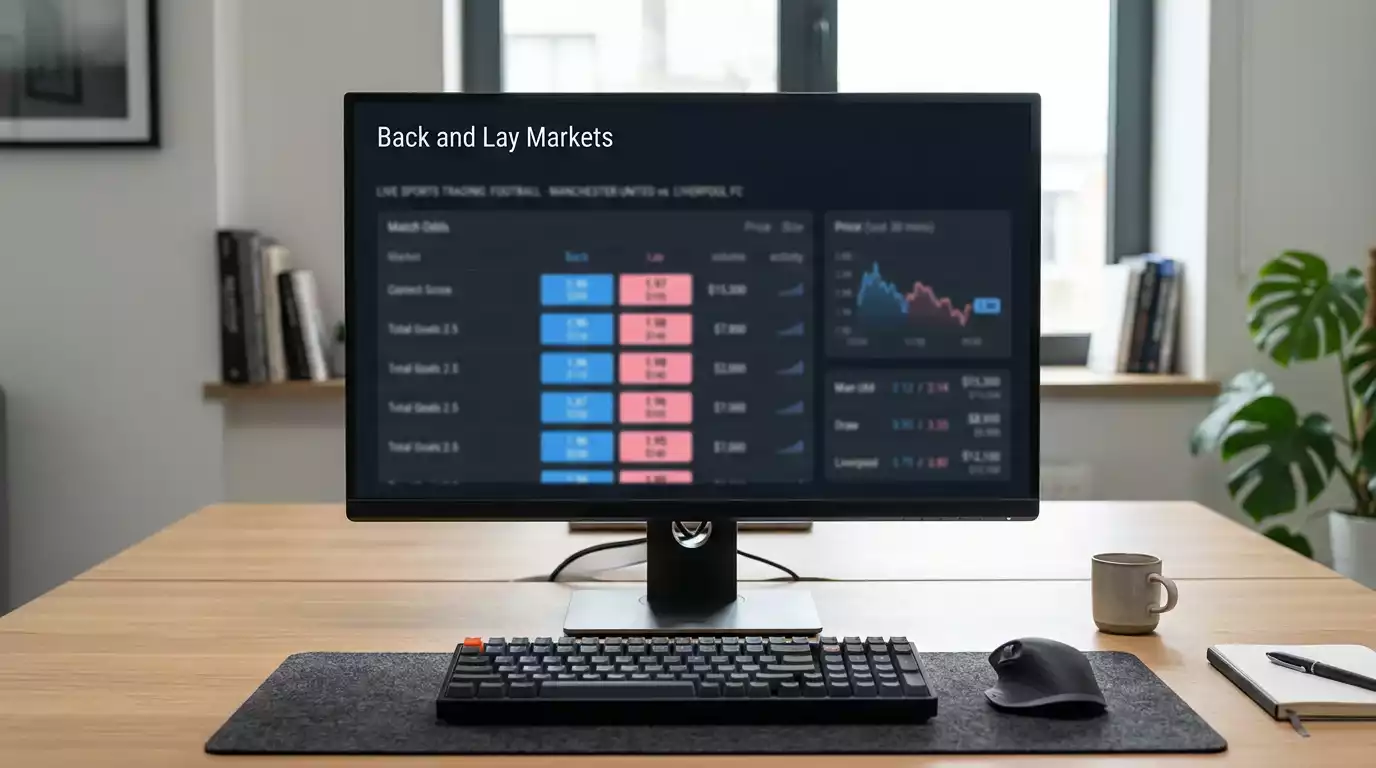
Evaluating Liquidity and Commission on NBA Betting Exchanges
The first time I placed an NBA bet on an exchange rather than a traditional sportsbook, I felt like I had been playing a different sport entirely. Instead of accepting the bookmaker’s price, I was setting my own. Instead of betting against the house, I was betting against another punter. That structural shift — from a fixed-odds model to a peer-to-peer marketplace — changes the economics of every NBA bet, and yet the overwhelming majority of UK basketball bettors have never tried it.
An exchange operates like a stock market for bets. You can “back” an outcome (bet that it will happen) or “lay” an outcome (bet that it will not happen), and the platform matches your order with another user on the opposite side. The exchange charges a commission on winning bets — typically 2% to 5% — instead of building a margin into the odds themselves. That difference in fee structure can produce better effective odds than a traditional sportsbook on many NBA markets, though the advantage depends on the specific market’s liquidity.
For UK punters, exchange betting on NBA is available but niche. The major exchange platforms are UKGC-licensed, the markets are legal, and the mechanics are straightforward once you understand the back/lay distinction. The question is whether the NBA-specific market conditions make exchange betting practical and profitable relative to the more familiar sportsbook model.
Back and Lay Explained for NBA Bets
Backing on an exchange works exactly like placing a traditional bet. You select the outcome, set your stake, and if the outcome occurs you win at the agreed odds minus the exchange commission. The difference is that instead of accepting a price set by the bookmaker, you can request a specific price and wait for another user to match it, or you can accept the best available price already listed in the market.
Laying is the revolutionary part. When you lay an outcome, you are effectively acting as the bookmaker. If another user wants to back Team A to win at 2.0 (decimal), you can lay that bet by offering to pay out at 2.0 if Team A wins. Your liability is the amount you would owe if the bet wins; your profit is the backer’s stake if the bet loses. Laying opens an entirely new dimension of NBA betting — you can profit from a team losing, a player going under on a prop, or a total staying below a threshold, all without the restrictions that some sportsbooks impose on “taking the other side.”
The practical advantage for NBA is in the odds. Because the exchange does not embed a margin into the price, the odds available on both back and lay are typically closer to the true probability than what a sportsbook offers. A prop that a sportsbook prices at 10/11 (implied 52.4%) might be available to back on the exchange at 1.98 (implied 50.5%) after accounting for commission. That 1.9 percentage-point improvement in implied probability is real money over a large number of bets.
The disadvantage is that someone needs to be on the other side. If I want to back a player’s points over at 2.0 and no one is willing to lay it at that price, my bet sits unmatched. I can lower my requested price to attract a counterparty, but that erodes the odds advantage that brought me to the exchange in the first place. This tension between price and execution is the central trade-off of exchange betting, and for NBA it is sharper than for football because the NBA market is smaller.
Liquidity Challenges in NBA Exchange Markets
Football generates GBP 1.1 billion in gross gambling yield for UK operators — more than any other sport by a wide margin. NBA does not come close. That revenue disparity translates directly into liquidity: football exchange markets are deep, with thousands of pounds matched on Premier League games. NBA exchange markets are thinner, with matched volumes that can be ten to fifty times smaller depending on the game and market type.
For NBA moneylines and spreads on marquee games — nationally televised matchups, playoff games, finals — exchange liquidity is adequate. I can typically get GBP 50 to GBP 200 matched at competitive odds on a high-profile NBA game result market. For player props on the exchange, the situation is different. Liquidity on individual player prop markets is often negligible, with only a handful of pounds available at any given price. That makes exchange prop betting impractical for any stake size above micro-level.
The liquidity problem compounds at tip-off. Pre-game NBA exchange markets have their peak liquidity in the hour before the game starts. Once the game is live, the matching engine works faster but the available volume can drain quickly as positions are taken. Late-night UK games that start at 02:00 or 03:00 have the thinnest liquidity because most UK exchange users are asleep. I have had NBA bets sit unmatched for the entire game on west-coast late starts, which is wasted capital and wasted analysis.
My practical rule: I use the exchange for NBA moneyline and spread bets on games with clear public interest — conference leaders, rivalry matchups, nationally televised games. For those markets, the odds improvement over sportsbooks justifies the execution risk. For player props, I stick to traditional sportsbooks because the liquidity simply is not there to get matched at a meaningful stake. That division is not a weakness of the exchange model — it is an honest assessment of where the tool works and where it does not.
Exchange vs Traditional Sportsbook: Pros and Cons
I maintain accounts on both exchanges and traditional sportsbooks, and I route each NBA bet to the platform that offers the best combination of odds, liquidity and execution speed. The decision is not ideological — it is pragmatic.
The exchange wins on price for liquid markets. When I can get matched, the effective odds after commission are consistently 1-3% better than the best sportsbook price on NBA moneylines and spreads. Over a season of 200 bets, that improvement adds roughly GBP 300 to GBP 500 of additional profit at my staking level. The exchange also wins on flexibility: the ability to lay outcomes, to trade positions in-play, and to set my own prices gives me tools that no traditional sportsbook provides.
The sportsbook wins on prop market access, execution certainty and promotional value. I can bet any prop on any game at any time and know it will be accepted instantly. The sportsbook also offers free bets, enhanced odds and acca boosts that, despite their shrinking generosity under the new Remote Gaming Duty regime, still carry positive expected value when used selectively. Those promotional edges do not exist on exchanges.
The sportsbook also wins on account stability. Exchanges do not restrict winning accounts the way many traditional bookmakers do. If you are a profitable NBA bettor, a sportsbook may eventually limit your stakes or close your account. Exchanges welcome volume from all sides because they earn commission regardless of who wins. For long-term, systematic NBA bettors who generate consistent profits, the exchange offers a structural home that the traditional sportsbook may eventually revoke.
My recommendation for UK NBA bettors: open an exchange account alongside your sportsbook accounts. Use the exchange for game-result markets where liquidity supports it. Use sportsbooks for player props. Compare prices on every bet before placing it. That hybrid approach captures the best of both models and avoids the limitations of either. A deeper understanding of which platforms serve NBA bettors best helps you allocate your action across the right mix of tools.
Can I bet on NBA player props on a UK betting exchange?
Technically yes, but liquidity on NBA player prop markets is very thin on UK exchanges. You may struggle to get bets matched at meaningful stakes, especially on non-marquee games and late-night west-coast fixtures. For player props, traditional sportsbooks offer guaranteed execution and deeper market coverage. Use the exchange primarily for NBA moneyline and spread markets where liquidity is adequate.
Is exchange betting on NBA markets cheaper than traditional bookmakers?
Exchange odds are typically 1-3% better than sportsbook odds on liquid NBA markets after accounting for commission. The savings come from the peer-to-peer model, which eliminates the bookmaker’s built-in margin. However, if liquidity is thin and you have to accept a worse price to get matched, the advantage can disappear. The cost benefit depends on the specific market and game.
Written by the editors at nba Player Betting.