Best NBA Betting Sites UK: Top Sportsbooks and Prop Odds
 Available in US
- Six Key Metrics for Reviewing UK NBA Betting Sites
- Prop Market Depth: Who Offers the Widest NBA Player Markets
- Odds Quality and Overround Comparison
- Mobile Experience: Apps, Speed, and In-Play Latency
- Live Betting Features for NBA Props
- Sign-Up Offers and Ongoing Promotions: Realistic Assessment
- Responsible Gambling Tools by Operator
- Choosing an Operator as a Long-Term Decision
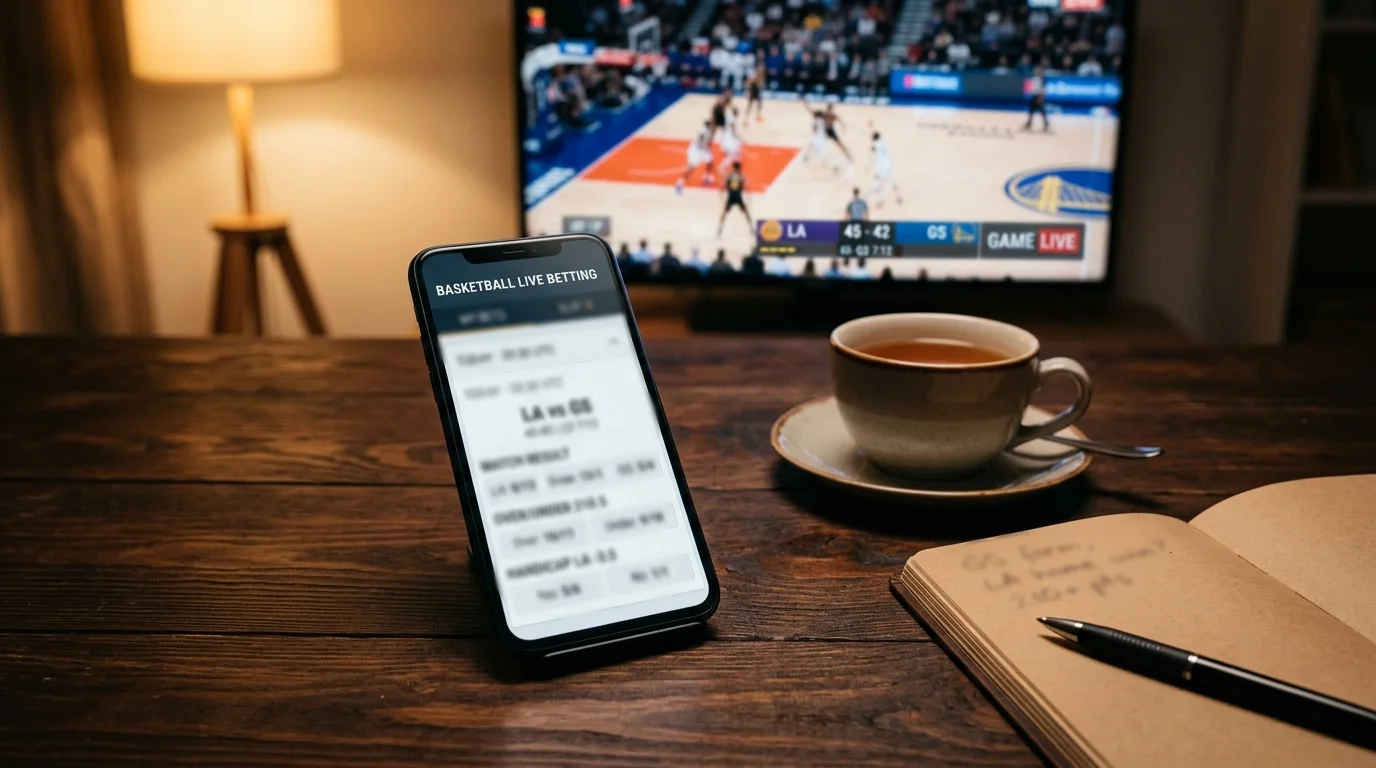
Most “best NBA betting sites” articles in the UK read like press releases. A list of five operators, each with a star rating, a sign-up bonus, and a paragraph of praise that could apply to any sportsbook on any sport. I have read dozens of them while researching this market, and not one told me the thing I actually needed to know: which operator lets me bet on Jalen Brunson’s assists at 2am on a Wednesday, with competitive odds, on a mobile interface that does not crash when the fourth quarter starts?
That gap between what gets published and what bettors need is the reason this guide exists. Roughly 8-10% of UK adults actively bet on sport online, and a growing segment of that population is interested in NBA markets. 76% of young adults aged 18-24 use their mobile phone as their primary betting device — the highest of any age group. These punters are not looking for generic sportsbook reviews. They want to know which operators deliver on the specific requirements of NBA player prop betting: market depth, odds quality, live-bet speed, mobile reliability, and transparent responsible-gambling tools.
I am not going to rank operators or tell you which one is “best.” That framing is dishonest because the answer depends on what you prioritise. What I will do is lay out the metrics that matter, explain how to evaluate them yourself, and flag the structural differences between operators that affect your NBA prop betting experience in ways you might not have considered.
Six Key Metrics for Reviewing UK NBA Betting Sites
After nine years of placing NBA prop bets across more UK sportsbooks than I can count, I have narrowed the evaluation down to six metrics. These are not subjective preferences — they are measurable attributes that directly affect your expected return and your experience as a bettor.
The first metric is UKGC licensing status. This is non-negotiable. The UK Gambling Commission conducted approximately 9,700 compliance actions in the 2024/25 reporting period — more than double the previous year — and imposed £4.2 million in fines. Over 95,000 illegal gambling URLs were removed. A UKGC licence is your baseline protection: it guarantees that the operator is subject to UK consumer protection law, that your funds are segregated, and that you have a formal complaints and dispute resolution pathway. If an operator is not listed on the Gambling Commission’s public register, do not deposit a penny.
The second metric is prop market depth — how many individual player prop markets the operator offers per NBA game. The third is odds quality, measured by the overround on player prop markets. The fourth is mobile experience, covering app stability, navigation speed and in-play bet placement latency. The fifth is live betting features specific to NBA props. The sixth is the quality and accessibility of responsible gambling tools.
I will break down each of these in the sections that follow. The order is deliberate: licensing is the entry gate, prop market depth and odds quality determine your edge, mobile and live features determine your execution, and responsible gambling tools determine whether the experience remains sustainable.
Prop Market Depth: Who Offers the Widest NBA Player Markets
Not all sportsbooks are created equal when it comes to NBA player props, and the difference is not subtle. On a typical regular-season game between two mid-table teams, I have seen one UK operator offer 180+ individual player prop lines while another offers fewer than 30. That is not a rounding error — it is a fundamentally different product.
Market depth matters for two reasons. The obvious one is selection: more markets mean more opportunities to find an edge. If your analysis identifies value on a player’s rebounds prop but your sportsbook only carries points and assists, that edge is useless to you. The less obvious reason is competition. Operators that offer deep prop markets tend to price them more aggressively because they are competing for the sharp-bettor segment. Operators that offer a handful of props as an afterthought tend to load heavier vig because prop bettors on their platform are a low-priority customer base.
When assessing market depth, check three tiers. The first tier is core props: points, rebounds, assists for all starters and key rotation players. Every serious NBA sportsbook should cover this. The second tier is extended props: threes made, steals, blocks, turnovers, and combo markets (PRA, PA, PR). This is where operators start to separate. The third tier is exotic props: first basket scorer, double-double yes/no, performance milestones, and player-specific specials. Only a handful of UK operators go this deep on a consistent basis.
I keep a simple log: once a month, I pick a random mid-week NBA fixture and count the total player prop lines available on each sportsbook I use. The numbers fluctuate — operators scale their market offering based on game profile, with nationally televised games and playoff fixtures getting deeper coverage — but the monthly snapshot gives me a reliable ranking of who consistently invests in NBA prop coverage and who treats it as filler.
Odds Quality and Overround Comparison
Two sportsbooks can offer the same player prop line — say, over 22.5 points — and price it differently enough that the long-term difference in returns is significant. On one operator, the over might be 5/6 (implied probability 54.5%). On another, it might be 10/11 (implied probability 52.4%). That 2.1 percentage-point gap, compounded over a season of hundreds of bets, represents real money.
The cleanest way to compare odds quality is to compare overround on identical markets. Pull up the same player prop on three or four sportsbooks, convert both sides to implied probability, and sum them. The operator with the lowest total offers the tightest margin. If you need a refresher on how to perform that conversion and what the numbers mean, the odds and implied probability guide walks through the full process. For core NBA player props (points, rebounds, assists), I have found that the tightest UK operators run overrounds in the 4-6% range, while the widest sit at 8-12%. On extended props and exotics, the range widens further.
It is tempting to assume that the operator with the lowest overround is always the best choice. Usually it is, but there is a caveat: some operators offer tight margins on core props to attract volume and then load heavy vig on extended props. If your strategy focuses on three-pointer or rebound props rather than points, the operator with the best headline overround on points lines might not be the best operator for you. Test overround on the specific market categories you bet most frequently.
One structural factor to watch: the UK Remote Gaming Duty is rising to 40% from April 2026 — nearly doubling the current rate. Government analysis projects that operators will pass up to 90% of the increased tax burden through to consumers via wider margins or reduced payouts. That means the overround you see today on NBA props will almost certainly widen across the board over the coming months. Operators with the tightest current margins may have the least room to absorb the increase, which could change the competitive landscape meaningfully.
Mobile Experience: Apps, Speed, and In-Play Latency
NBA games tip off between 11pm and 3:30am UK time. You are not sitting at a desktop at 1am on a Thursday. You are in bed, phone in hand, watching a stream on one device and placing bets on another. This is the reality of NBA betting in the UK, and it means the mobile experience is not a nice-to-have — it is the primary interface. 43% of all UK bettors use a mobile phone as their main betting device, and among 18-24 year olds that figure hits 76%.
When I evaluate a mobile app for NBA prop betting, I focus on three things: navigation speed, bet placement flow, and crash frequency during peak load.
Navigation speed is how quickly I can get from opening the app to finding a specific player prop on a specific game. The best apps let me search by player name directly and land on the full prop menu in two taps. The worst require me to navigate through Sport, then Basketball, then NBA, then the specific game, then the Player Props tab, then scroll through an alphabetical list of players. By the time I find the prop I want, the line has moved.
Bet placement flow is the number of steps between selecting a price and confirming the bet. One tap to add to the slip, enter the stake, one tap to confirm — that is the gold standard. Apps that add intermediate screens, confirmation pop-ups, or upsell prompts (add another leg, boost your odds) slow the process down and introduce friction that costs real money on time-sensitive live bets.
Crash frequency during peak load is the test that separates serious sports betting apps from those built primarily for football and horse racing. NBA playoff games generate spikes in prop betting volume, and apps that handle Premier League Saturdays comfortably can struggle under the different traffic pattern of a late-night NBA fixture with heavy in-play action. I have had apps freeze mid-bet placement during a fourth-quarter run, returning to a “price has changed” error after the moment has passed. Test any new sportsbook app during a live NBA game before committing your bankroll to it.
Live Betting Features for NBA Props
Pre-game prop betting is where you do your homework. Live prop betting is where you test your reflexes and your nerve. The two experiences are different enough that the same operator can excel at one and fail at the other.
The key differentiator for live NBA prop betting is which markets stay open during play and how quickly they update. Some UK sportsbooks suspend all player props at tip-off and only offer game-level live markets (next team to score, live spread, live total). Others keep core player props (points, rebounds, assists) open throughout the game, adjusting lines after each possession. A smaller group keeps extended props (threes, combo stats) open as well. The breadth of live prop availability varies not only by operator but by game — a nationally televised playoff fixture will have deeper live prop coverage than a mid-season Tuesday game.
Latency is the hidden variable. There is always a delay between an event occurring on the court (a player scores a basket, grabs a rebound) and the sportsbook’s system processing that event and updating the live prop line. That delay can range from a few seconds on the fastest platforms to 10-15 seconds on slower ones. If you are watching a stream with minimal delay and the sportsbook’s lines are lagging, you may have a window to place a bet at a price that does not yet reflect what just happened. Operators are aware of this and mitigate it by suspending markets during rapid action — but the suspension speed itself varies, creating brief windows of opportunity on the most responsive platforms.
Cash-out functionality on live NBA props is another differentiator. Some operators offer full and partial cash-out on in-play prop bets, allowing you to lock in profit or cut losses before the game ends. Others do not offer cash-out on prop markets at all. For bettors who manage their positions actively rather than placing a bet and walking away, cash-out availability is a significant factor in operator selection. Partial cash-out — where you secure a portion of your potential return while leaving the rest of the bet running — is especially useful during NBA fourth quarters when a player is close to clearing a line but foul trouble or a blowout could pull him from the game early. Not every sportsbook that offers cash-out on pre-game bets extends the same feature to live props, so test this explicitly before you rely on it as part of your in-play strategy.
Sign-Up Offers and Ongoing Promotions: Realistic Assessment
I am going to be blunt about promotions because nobody else seems willing to be: most sign-up offers on UK sportsbooks are designed to acquire customers, not to give them an edge. The free bet you receive for opening an account has wagering requirements, expiry dates, and restrictions on which markets qualify. By the time you have met the conditions, the effective value of the “free” bet is typically 30-50% of its face value. That is still free money, and I take every sign-up offer I qualify for, but I do it with open eyes about what I am actually getting.
For NBA prop bettors specifically, the relevant question is whether the ongoing promotions — not the one-time sign-up offer — add value to your regular activity. Some operators run profit-boost tokens on NBA player props, typically adding 10-25% to the payout on a single bet. Others offer accumulator insurance that refunds your stake (as a free bet) if one leg of your multi-bet loses. A few run NBA-specific promotions during the playoffs, such as enhanced odds on selected player props.
Here is the reality check: the Remote Gaming Duty increase to 40% will squeeze operator margins across the board. The government’s own impact assessment projects that operators will absorb only about 10% of the duty increase, passing the remaining 90% to consumers. That pass-through will likely manifest as thinner sign-up offers, fewer ongoing promotions, and tighter odds — not as a headline announcement but as a gradual erosion. The promotional landscape for NBA betting in the UK in 2027 will almost certainly be less generous than it is today. Factor that into your operator selection: an operator with consistently competitive base odds is more valuable in the long run than one that compensates for wide margins with flashy but declining promotions.
One trap I see repeatedly: bettors choosing their primary sportsbook based on the sign-up offer alone. A £20 free bet is consumed in a single evening. The overround on every bet you place for the next twelve months is the ongoing cost. A sportsbook with no free bet but 2% tighter margins on player props will save you more money over a full NBA season than any welcome bonus.
Responsible Gambling Tools by Operator
Andrew Rhodes, the Gambling Commission’s CEO, made the position clear at the start of 2026: the Commission aims to make gambling safer, fairer and crime-free, and operators who fall short will face consequences without warnings. That enforcement posture means every UKGC-licensed sportsbook is required to provide a set of responsible gambling tools. But the quality, accessibility and design of those tools varies enormously.
The baseline tools mandated by regulation include deposit limits (daily, weekly, monthly), session time reminders, self-exclusion options, and access to GAMSTOP — the national self-exclusion scheme that covers all UKGC-licensed online operators. Every operator you encounter will offer these. The question is how they are implemented.
On some sportsbooks, setting a deposit limit takes two taps from the account settings screen. On others, it requires navigating through a multi-step process that feels deliberately discouraging. Some apps display session-time notifications prominently and pause the betting flow until you acknowledge them. Others show a dismissible banner that disappears in three seconds. These design choices matter. A tool you can find and use quickly is a tool you will actually use. A tool buried four menus deep is decoration.
Beyond the mandated minimum, some operators offer additional features: reality checks that show your net profit or loss during a session, cooling-off periods shorter than full self-exclusion (24 hours, 48 hours, one week), and transaction history dashboards that break down your betting by sport, market type and time of day. For NBA prop bettors who are active late at night — remember, games tip off between 11pm and 3:30am UK time — the session-timer and cooling-off features are particularly relevant. Late-night betting sessions carry a well-documented risk of impaired decision-making, and having tools that intervene during those sessions is not a weakness — it is a structural advantage.
Choosing an Operator as a Long-Term Decision
Picking a sportsbook for NBA prop betting is not a one-off decision. It is a relationship you will maintain across an entire season — or several seasons. The operator you choose determines the markets available to you, the prices you pay, the speed at which you can execute, and the safety net that catches you if your relationship with betting becomes unhealthy.
My recommendation is straightforward: open accounts with two or three UKGC-licensed operators that score well on prop market depth and odds quality. Use the one with the best price on any given bet. Set deposit limits on all three. Review your results monthly. And if the regulatory environment shifts the competitive landscape — as the Remote Gaming Duty increase almost certainly will — be prepared to reassess. For a complete walkthrough of how operator selection connects to odds literacy, bankroll management and the integrity questions shaping the UK market, the full NBA player betting guide ties all of these threads together.
Which UK bookmakers offer the best NBA prop markets?
The answer depends on what you prioritise: market depth, odds quality or mobile experience. Rather than relying on a ranking, open accounts with two or three UKGC-licensed operators and compare their NBA player prop offerings on a mid-week game. Count the number of available prop lines, compare the overround on core markets, and test the mobile app during a live game. The operator that scores best across these metrics for your specific betting style is the right choice for you.
Do all UK betting sites show NBA odds in fractional format?
No. Some UK sportsbooks default to decimal odds for NBA and other American sports markets, even if your account is set to fractional format for football. You can usually switch between fractional, decimal and American odds in your account settings or on the bet slip itself. Check your display settings before placing a bet to ensure you are reading the odds in the format you are most comfortable with.
How do I verify that an NBA betting site is UKGC-licensed?
Visit the Gambling Commission’s public register on their official website. You can search by operator name to confirm they hold a valid remote operating licence. Every licensed operator is also required to display their licence number and a link to the Gambling Commission’s website in the footer of their own site. If you cannot find a licence number or the operator does not appear on the public register, do not use that site.
Prepared by the nba Player Betting editorial staff.