NBA Playoff Betting: Pricing Postseason Prop Markets
 Available in US
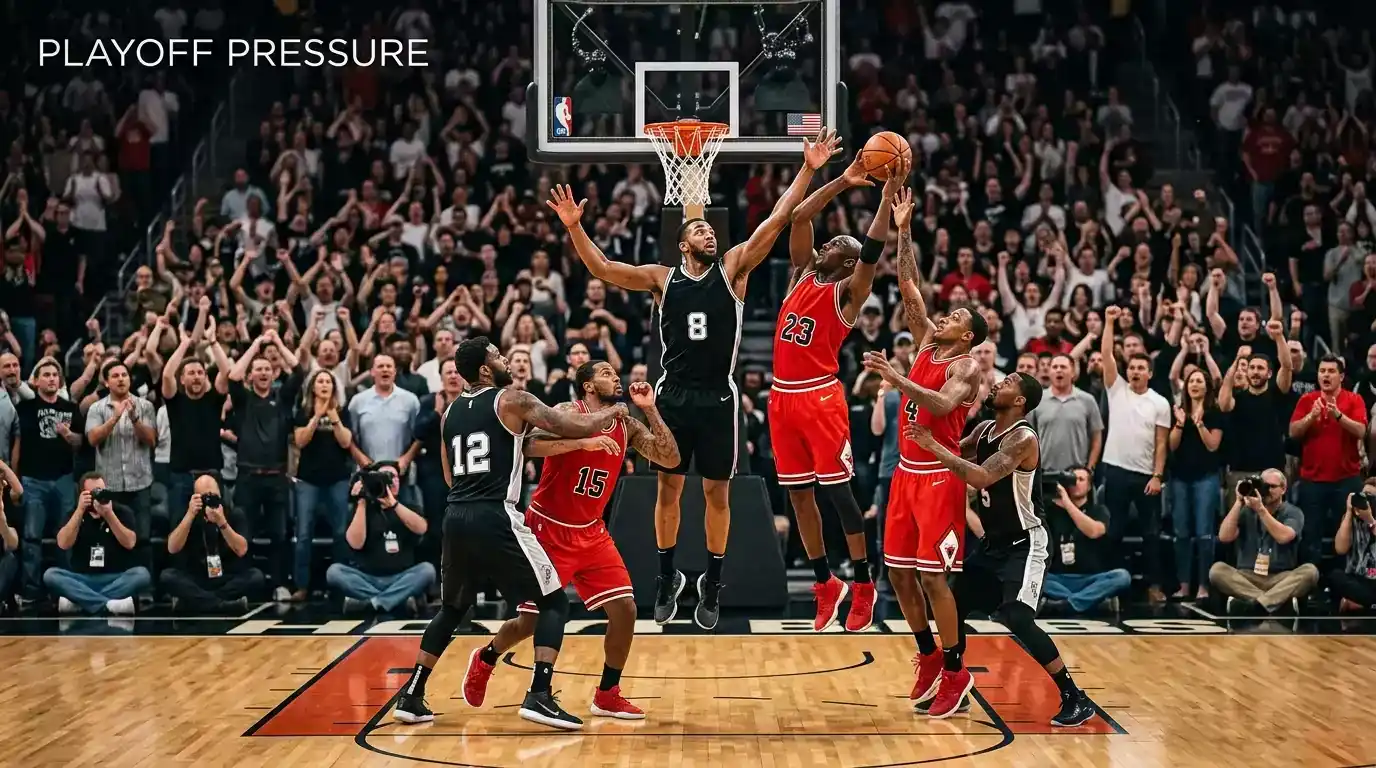
Pricing Postseason Intensity into NBA Player Props
The regular season taught me how to bet on basketball. The playoffs taught me that everything I learned needed recalibrating. NBA playoff betting strategy demands a different framework because the game itself changes — rotations tighten, defensive intensity spikes, and the statistical patterns you spent six months tracking from October through April stop predicting outcomes as cleanly as they did before. The NBA market, valued at $12.94 billion and projected to reach $20 billion by 2031, peaks in engagement during the postseason, and the influx of casual money reshapes the odds landscape in ways that disciplined bettors can exploit.
The single biggest shift is structural: the regular season is 82 games long, a marathon that rewards load management and bench depth. The playoffs are a series-based tournament where every game matters, coaches shorten their rotations, and star players absorb a disproportionate share of minutes and offensive responsibility. That concentration of opportunity changes the mean and the variance of individual player statistics, which means the prop lines that served you well in February may systematically misjudge output in May.
For UK bettors watching games that tip off at midnight or later, the playoffs also concentrate the schedule. Fewer games per night, more national attention per matchup, and tighter odds as a result. The inefficiencies are fewer but sharper — a well-researched position in a playoff game can carry a larger edge than in a random regular-season Tuesday night, precisely because the stakes force both bettors and bookmakers to take every data point seriously.
Star Minutes and Rotation Compression
I tracked star-player minutes across the last four playoff cycles and the pattern is stark. During the regular season, most top-tier players average 33 to 36 minutes per game. In the first round of the playoffs, that number climbs to 37-39. By the conference finals and NBA Finals, 40-plus minutes per game is not unusual for a team’s primary option. That jump of four to seven minutes translates directly into more shots, more rebounds, more assists, and higher prop ceilings.
The bench, meanwhile, evaporates. Regular-season rotations of nine or ten players compress to seven or eight in the playoffs. Coaches ride their best lineups for longer stretches, and the seventh and eighth men see their minutes cut by 30-50%. This has a cascading effect on prop markets: bench player overs that were profitable during the regular season become near-automatic unders in the postseason, while starter overs gain a structural tailwind from the extra playing time.
One subtlety that took me several playoff cycles to appreciate: the minutes increase is not uniform across all starters. The primary ball-handler and the primary scorer see the biggest jumps. A team’s fourth or fifth starter — often a defensive specialist or stretch four — might actually see stable or slightly reduced minutes because the coach is leaning harder into smaller, offensive-oriented lineups in crunch time. Prop bettors who treat all starters equally during the playoffs miss this distribution pattern and overpay for overs on the wrong players.
My approach: I build a separate playoff minutes model that projects each player’s postseason minutes based on their role, the expected competitiveness of the series, and their historical playoff usage. Then I compare those projections to the prop lines, which are often still anchored to regular-season data during the first round. The adjustment lag is where the edge lives.
Defensive Intensity: Regular Season vs Playoffs
Anyone who has watched a first-round NBA playoff game after months of regular-season basketball feels the difference viscerally. The pace drops, the physicality rises, and defensive schemes that were casually deployed during the regular season get executed with playoff-level discipline. For a prop bettor, that shift in defensive quality is the second-most important variable after minutes — and it pushes in the opposite direction.
Regular-season defensive ratings across the league average around 112-115 points per 100 possessions. In the playoffs, the best defensive teams tighten to 105-108. That gap of five to seven points per 100 possessions is enormous. It means fewer easy baskets, more contested shots, and lower shooting percentages across the board. Scoring props that looked safe during the regular season become dicey when the opposing defence is executing at playoff intensity on every possession.
The effect is especially pronounced in scouting. Regular-season opponents prepare a general game plan. Playoff opponents watch film of your favourite play fifty times and build specific counters. A player who feasted on a particular pick-and-roll action during the regular season may find that action completely taken away in a seven-game series. That kind of tactical adjustment does not show up in aggregate statistics until the series is two or three games deep, by which time the prop lines have usually caught up.
I have found the most actionable edge in the first one or two games of a playoff series, before the book has fully recalibrated. Opening-game prop lines tend to lean on regular-season data because there is no series-specific information yet. If I expect a defensive-minded team to slow the pace and lock down the opposing scorer, the scoring-prop over that the book posted based on regular-season averages is a candidate for a short position. By game three, the market has adjusted and the edge is gone.
Series Price Markets and Game-by-Game Props
Beyond individual game lines, UK sportsbooks offer series prices — bets on which team will advance and, in some cases, the exact series scoreline (4-0, 4-1, 4-2, 4-3). These markets are less liquid than game-day lines, which means the overround is higher but the scope for mispricing is also greater.
I use series prices as a complement to game-by-game prop betting. If I have taken a series price on Team A to win 4-2, I know that the game-by-game prop environment for that series should reflect alternating outcomes — Team A winning most games but dropping two. That expectation shapes my prop approach: in the games I expect Team A to win, I target their starter overs; in the games I expect them to lose, I look at underdog player props that benefit from the chasing dynamic, where a trailing team feeds its primary scorer at a higher rate.
Exact-scoreline bets carry the highest odds and the highest margin. I place them sparingly, only when I have a strong view on the series competitive balance. A 4-1 or 4-2 scoreline pays substantially better than a simple “Team A to advance” bet, and in lopsided first-round matchups between a first seed and an eighth seed, the 4-0 or 4-1 lines can offer genuine value because the public tends to overestimate the underdog’s ability to steal games in a short-turnaround series.
The intersection of series pricing and player props is where my most profitable playoff bets have come. I identify the two or three players whose statistical profiles shift most dramatically between home and road playoff games, then structure a position that pairs series direction with player-level output in a way that captures both edges simultaneously. It requires more upfront analysis than a simple live betting approach, but the payoff over a full postseason has consistently justified the effort.
Do NBA player prop lines increase during the playoffs?
Prop lines for star players often rise in the playoffs because of increased minutes and offensive responsibility. A player averaging 25 points in the regular season might see his playoff prop set at 27.5 or higher. However, the defensive intensity also increases, so higher lines do not automatically mean easier overs — the edge depends on the specific matchup and series context.
How does playoff defensive intensity affect individual stat totals?
Playoff defensive intensity reduces league-wide scoring efficiency by five to seven points per 100 possessions compared to the regular season. Players face more film study, tighter rotations and harder contests on their shots. This makes scoring props harder to clear, especially in later rounds where defensive effort peaks. The first one or two games of a series offer the best value before lines fully adjust.
Prepared by the nba Player Betting editorial staff.